Top 10 Tips To Evaluate The Compliance Of The PAT Regulatory Compliance For PAT in Dudley
The UK's regulatory framework for Portable Appliance Testing, or PAT, is fundamentally different than the prescriptive requirements applicable to fixed electrical equipment and fire safety devices. Unlike fire extinguisher servicing, which operates under specific British Standards and third-party certification schemes, PAT testing is governed by a broader health and safety framework that emphasizes risk assessment and duty of care rather than mandatory periodic testing schedules. Electricity at Work Regulations 1988, which states that electrical equipment must be maintained for safety purposes, is the main legal requirement. The Regulations are silent on how this should be done, nor do the regulations specify a testing schedule or methodology. The duty holder (typically an employer) is responsible for conducting a risk assessment that is sufficient to determine a maintenance and inspection schedule. Compliance is therefore not only demonstrated by test certificates, but also by a process of risk-based decisions, competent implementation and thorough documentation which proves an organized approach to electrical safety at the workplace.
1. The Legal Foundation: Electricity at Work Regulations 1989
Regulation 4(2) of 1989's Electricity at Work Regulations is a cornerstone to PAT test compliance. This regulation states that "As it may be necessary to avoid danger, all system shall be maintained in order to prevent, to the extent reasonably practicable, any such danger." The regulation imposes a duty of care on employers and their duty holders. The term "systems", which includes portable devices, is used. Crucially, the regulations do not mention "PAT testing" specifically; they mandate "maintenance," which is a broader concept encompassing visual inspection, user checks, and combined inspection and testing. The frequency and type of maintenance required are determined by the risk assessment, not by a fixed legal timetable.
2. Act 1974 on Health and Safety at Work Act 1974
The Health and Safety at Work and Other Legislation Act 1974 establishes general obligations employers have to employees and others. The Act of 1974, which is the most important piece of legislation, outlines the duties that employers have toward employees and others. The Act's Section 2 requires employers to take reasonable steps to ensure the health and safety of employees. This includes providing safe plant and systems of work, which encompasses electrical equipment. In Section 3, this duty extends to those not under their employment such as visitors and contractors. The PAT process is the best way to fulfil these duties because it is structured and provides a method for ensuring safety of electrical equipment.
3. Code of Practice of the IET for Electrical Equipment In-Service Inspections and Testing: Guidance and Best Practice
Although not law, the Institution of Engineering and Technology Code of Practice (IET Code of Practice) is universally recognized as the benchmark of best practice for PAT tests. It contains detailed information on how you can implement a compliance maintenance regime.
Definitions of appliance categories and types.
The detailed procedures for formal visual checks and combined inspections.
The equipment type, operating environment and recommended inspection and test frequencies will determine the initial frequency.
Test results must meet a pass/fail standard.
Courts and Health and Safety Executive (HSE) inspectors will use this code as the standard to judge whether a dutyholder's maintenance regime is "suitable and sufficient." Departures from the code which are not supported by robust and documented reasons can be interpreted to be non-compliance.
4. Risk Assessment is the Priority
HSE advocates an approach based on risk for PAT testing. This is a departure from the outdated idea of annual blanket testing. The dutyholder is required to carry out a risk assessment before determining the nature and frequency of testing and inspection. Key factors influencing this assessment include:
Equipment type. For a double-insulated Class II appliance in low-risk environments, only a visual test is required. In contrast, for a Workshop appliance of the same class that requires regular formal tests.
Environment: Construction site, warehouses and workshops are environments with high risk. Offices and hotels are generally lower risk.
Equipment users: Are they trained staff members or the general public?
Are you familiar with the appliance’s past history?
This risk assessment is what defines a compliant system, not the number of tests performed.
5. The concept of "Competence", for testers
Regulation 16 of the Electricity at Work Regulations (1989) states that anyone working with electrical equipment must have the required technical knowledge to avoid harm. For PAT, "competence", although not a formal qualification is required, must include:
Knowledge of electricity is essential.
Understanding and practical experience of the system on which they are working.
Understanding the hazards to be aware of and what precautions are needed.
Ability to correctly use and interpret test equipment.
City & Guilds is a popular qualification and provides excellent training. However, you can achieve competence through other methods. The duty holder must be able show that the person who conducts the testing is competent.
6. Documentation and record-keeping requirements
The Electricity at Work Regulations (EWR) do not specifically require recording. The Regulation 29 does state that it can be a defence if you prove that you took all reasonable steps to avoid an offense. Primary evidence of due care is comprehensive records. A compliant records-keeping system includes:
A register of assets for equipment.
Record of the risk assessment, and the maintenance plan that results.
Reports detailing each formal inspection or test. Includes appliance description, test result, pass/fail, next test date, and tester identity.
HSE officials or local authorities should be able to easily inspect these records.
7. Labeling and Identification of Appliances
Labelling effectively is crucial to the compliance of any PAT. Each appliance that's been subjected to a combined inspection and testing should be labeled with:
The unique ID number of the asset that links it to the record.
The test date.
The date for your next test.
The name or identifier of the tester.
The label serves as a clear indicator to users and inspectors about the appliance's level of compliance. Labels are durable, non-metallic and non-conductive.
8. The HSE's Enforcement stance and "Myth-Busting"
The HSE is actively working to dispel misconceptions surrounding PAT tests. They stress that:
No law requires that all equipment be tested annually.
A business can test their products themselves if it has competent staff. It is not required by law to use an outside contractor.
Visual inspection is often more important than electronic testing and can identify the majority of faults.
An enforcement officer may look for a method based on risk. A company that tests its equipment without any support in the form of a risk assessment will be seen as less favourably by an enforcement officer than one who can demonstrate a more robust risk assessment and justify a longer interval between testing for equipment with low risks.
9. Interaction with Other Legislation : PUWER
The Provision and Use of Work Equipment Regulations of 1998 (PUWER), also known as the Work Equipment Regulations, apply to portable appliances. PUWER states that all work equipment must be safe, fit for the intended use and maintained in a safe manner. It also requires regular inspections to make sure it is safe. In Regulation 6, inspections are specifically required when the safety of work equipment depends on its installation. The PUWER inspection and maintenance regulations for electrical work equipment are met by PAT testing, which is a critical method.
10. Insurance implications and due diligence
Insurance companies may have different requirements. As a condition for coverage, a policy might stipulate that a third-party conducts PAT tests annually. Failure to adhere to this could invalidate a claim. Moreover, in the case of an electrical event, the dutyholder’s records for PAT tests and risk assessment are the first documents that insurers and HSE officials will scrutinize. A well-documented risk-based system provides the strongest evidence possible of due diligence, and is a solid defence against prosecution or an invalidated claim. Take a look at the best electrical testing in Dudley for site info including extinguisher fire extinguisher, fire extinguisher inspections, extinguisher fire extinguisher, extinguisher testing, fire extinguisher extinguisher, fire extinguisher company, extinguisher testing, testing a fire extinguisher, fire extinguisher service Dudley, extinguisher fire extinguisher and more..

Top 10 Tips To Become Certified And Qualified For Services For Fire Extinguisher Services in Dudley
The UK fire extinguisher industry is governed by a solid system designed to ensure security, compliance and competency. Contrary to other professions that require state licensing, the onus is on the "Responsible Person" (under the Regulatory Reform (Fire Safety) Order 2005) to select an experienced service provider. This way, knowing the subtleties of the process of obtaining certification and qualifications isn't only a formality. It's an integral part of doing your due diligence. Because there are a myriad of different companies and providers available that include highly reputable companies as well as individual operators It is essential to distinguish between qualifications. If you choose a technician who does not have the proper credentials could invalidate your insurance, violate legal obligations and leave the occupants of your home and you in danger. This guide will help you understand the importance of certifications and qualifications in order to select a competent partner.
1. The Gold Standard – Third-Party Certification Accredited by UKAS (BAFE SP101).
The primary certification to check is a company's registration to the BAFE SP101 scheme. BAFE is a registration body that is independent. The SP101 scheme is designed specifically for the maintenance of fire extinguishers that are portable. The UKAS accreditation is an essential element. This means that the scheme was rigorously evaluated against international standards. A BAFE-SP101 certificate that is certified by UKAS offers the most convincing evidence of a company's competence. It confirms the ongoing auditing of the company's working methods, quality management systems equipment, technicians, and other areas.
2. The Alternative Benchmark is FIRAS certification
FIRAS is another UKAS certified certification scheme run by the Fire Industry Association. It is comparable in terms of rigor to BAFE SP101. FIRAS Certification gives the same level assurance that a business has been independently evaluated and audited, and has been found to be in compliance with every relevant standards including BS5306-3. If you're an individual with a responsibility and a business which has either the BAFESP101 or FIRAS certifications is a valid choice. The UKAS accreditation is essential.
3. The Foundation: Compliance with BS The Foundation: Compliance with BS in Dudley
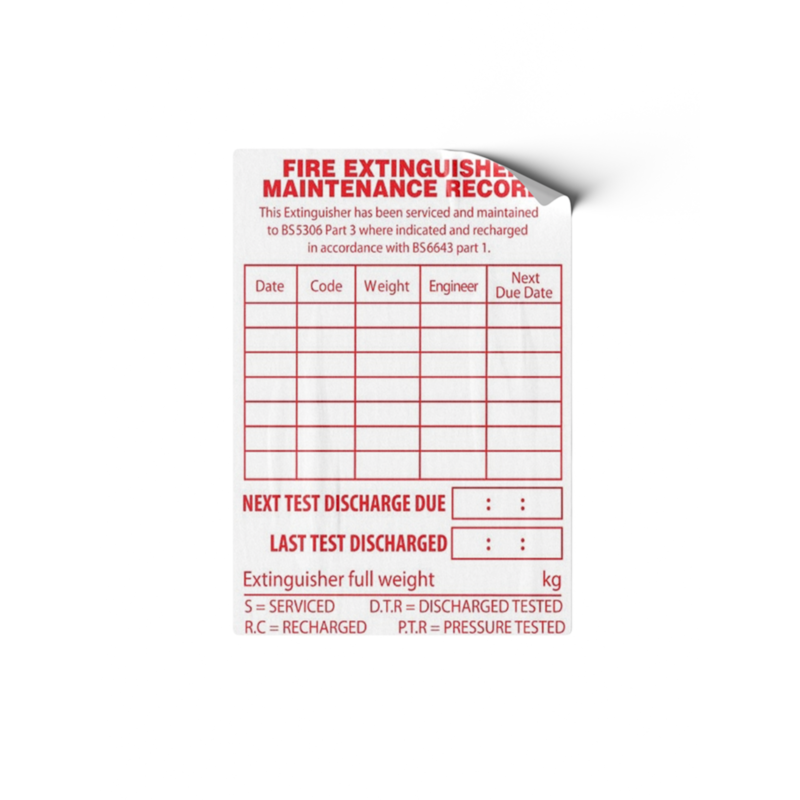
It is essential to demonstrate compliance with the British Standard BS 5306-3 :2017 in order to qualify or to certify. This code of ethics is a definitive set of guidelines for the maintenance of fire extinguishers. Technicians must be trained in accordance with the requirements of the code. These dictate monthly inspections, annual service and five-year extended service for water/foam extinguishers as well as the ten-year overhaul of CO2 units. This conformity can be inspected and confirmed by certifications like FIRAS and BAFE. When evaluating companies, ask the company to provide a detailed explanation of how they meet this standard.
4. Individual Technician Competence – The FIA Units of Competence
Although company certification is important however, the individual technicians do the job. The FIA Units for Competences which are the most widely-known personal qualifications, are among the most recognized. They are nationally recognized learning modules that are evaluated against National Occupational Standards. The most important units are:
FIA unit 001: Maintenance Portable Fire Extinguishers Core Module
FIA Unit 010: Overhaul of portable fire extinguishers (Advanced module to provide extended services)
A skilled technician must to possess at least FIA Unit 001. Technicians who provide extended services (e.g. discharges of 5 years) must also have Unit 010. Find out about potential providers' particular qualifications for technicians.
5. The Role of Trade Associations in Dudley
Certification is not the outcome of being a member of an organization for trade such as the FIA. They can be part of a business without certifying that they adhere to their technical schemes. Membership does not prove competency, but rather demonstrates a desire to become an expert and receive the best practice guidance. Look for certifications specifically designed for the particular scheme (e.g. BAFE SP101) instead of general logos for membership.
6. Insurance: Public Liability, Professional Indemnity in Dudley
Any reliable service provider will insist on a sufficient insurance. Public Liability Insurance is required (e.g. PS5m+) to protect against accidental damage caused to your property. Professional Indemnity Insurance will also protect against any mistakes made during the work they perform or in the recommendations given. They are also a requirement to be certified. It is wise to verify the proof of insurance before making a decision to hire their services.
7. Manufacturer-Specific Training
While the principles of BS 5306-3 can be applied to all situations the different manufacturers of extinguishers have distinct valve models, valve mechanisms, and recharge procedures. A highly qualified technician will often undergo manufacturer-specific training. This is crucial, particularly for more complicated or less common extinguisher models like dry or wet cleaner agents or chemical systems. This training ensures that your technician is able to effectively and safely maintain any equipment within your facility without voiding the manufacturer's warranty.
8. The Auditing Process How is Certification maintained in Dudley
It is important to understand that certification isn't a one-off. BAFE, FIRAS and other certified businesses are subject to a regular surveillance audit conducted by accredited auditors. These audits occur without notice and involve conducting interviews with technical staff, and observing the work that is performed on-site. These certificates are valuable because they are continuously reviewed by third individuals. This guarantees that the competence of technicians isn't just examined at a single moment in time and then maintained.
9. The "Competent Person " vs. the 'Skilled Person'
There is a legal distinction. According to the Fire Safety Order (FSO), only "competent individuals" are permitted to operate equipment. Based on the case law the term "competent person" refers to someone who has the necessary qualifications, expertise, training, and other attributes to implement the required measures. The term "skilled" refers to a "skilled" person (or tradesperson who has a high degree of education) is one who is physically ability to perform a task. A qualified fire extinguisher technician should be both–possessing the practical skill to do the job and also the necessary knowledge to understand the regulations as well as the standards and risks that are involved.
10. Due diligence: Verifying the authenticity of certificates and claims
The responsible person is ultimately accountable for ensuring that qualifications are met. The logo on a website or van isn't enough.
Verify online. You can confirm the certification status of a business by searching the internet for the company's name. company. in Dudley
Request Certificates: A legitimate business will be pleased to supply copies of their BAFE SP101 and FIRAS certificates as well as insurance documentation, as well as evidence of their technicians' FIA qualifications. in Dudley
Check Expiry Days: Verify that all certificates, insurance policies and other papers are up to date. in Dudley
This verification is your best protection against an unqualified service provider. It's also the core of your own due diligence. View the best fire extinguisher maintenance in Dudley for site recommendations including fire extinguisher for electrical fire, fire extinguisher fire, fire extinguisher in electrical fire, electrical fire extinguisher, fire service, extinguisher company, a fire extinguisher, fire extinguisher fire extinguisher, extinguisher inspections, testing a fire extinguisher and more. More broadly, take a look at the top fire extinguisher inspection for more.